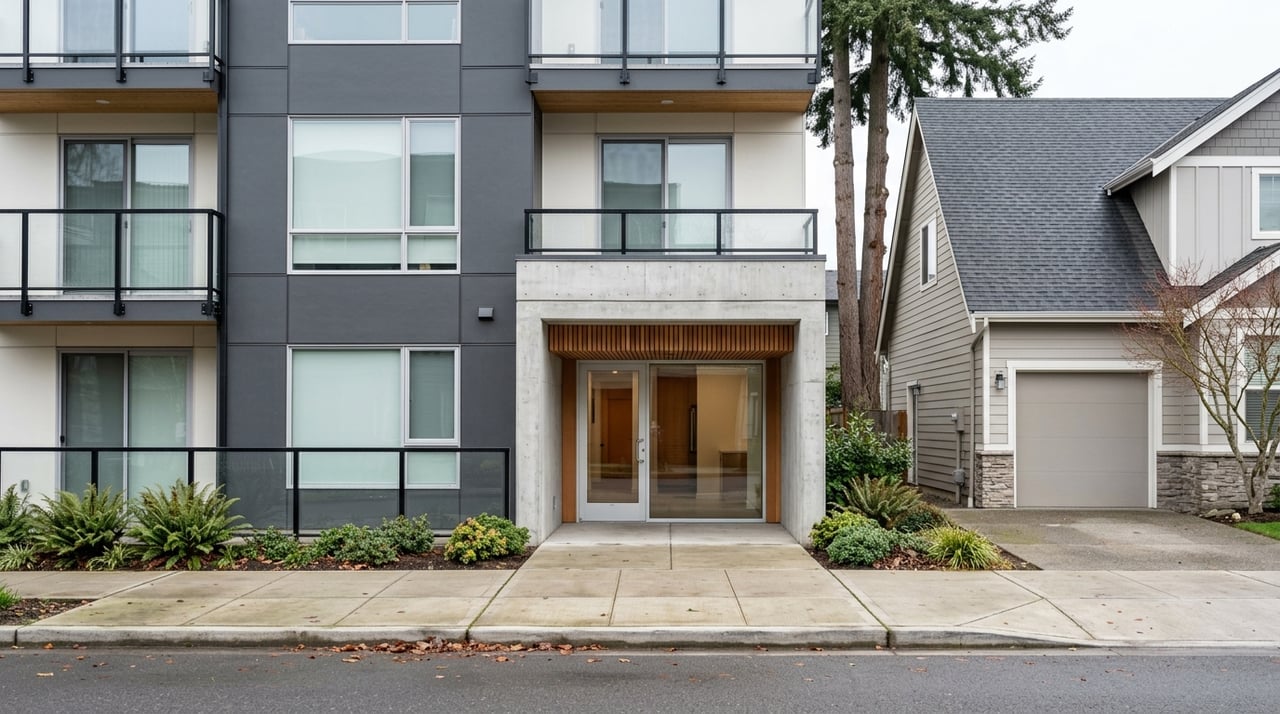
Trying to choose between a condo and a house in Bellevue? It is one of the biggest lifestyle decisions you can make in this market, especially when price, commute, space, and monthly costs can look very different from one property type to the next. If you are weighing convenience against square footage, or flexibility against lower-maintenance living, this guide will help you sort through the tradeoffs and decide what fits your day-to-day life best. Let’s dive in.
Why Bellevue creates a real choice
Bellevue gives you a genuine condo-versus-house decision because the city blends a major job center, growing transit access, and a wide range of housing types. The City of Bellevue promotes options like bus service, biking, carpooling, vanpooling, and light rail as alternatives to solo driving, which shapes how many buyers think about where and how they want to live.
That shift became even more meaningful with the 2 Line now running across Lake Washington. Sound Transit says the completed line began service on March 28, 2026, and stretches 14 miles from downtown Seattle to the Overlake area in Redmond, with stations in Mercer Island, South Bellevue, downtown Bellevue, BelRed, and Overlake. Trains run about every eight minutes at peak, and Bellevue Downtown Station is about a 20-minute ride to International District/Chinatown.
Because Bellevue is planning for transit-centered, mixed-use neighborhoods, condos near downtown and station areas often serve a different daily routine than detached houses in less transit-oriented settings. That does not make one better than the other. It simply means your ideal property depends heavily on how you live.
Price differences in Bellevue
One of the clearest differences is entry price. Current market data shows Bellevue condos listed at a median price of about $600,000, while Bellevue’s overall median sale price was $1.5 million in March 2026.
That gap matters if you are deciding how much space you need versus how much flexibility you want in your monthly budget. For many buyers, condos create a more accessible path into Bellevue ownership, while houses often require a much larger financial commitment up front.
Price also connects directly to what you get. Current condo listings in Bellevue are mostly one- to two-bedroom homes, often around 734 to 1,388 square feet. Detached-home examples are often three to five bedrooms and roughly 2,200 to 4,520 square feet.
Condo lifestyle in Bellevue
A condo often works best if you want a simpler, more efficient home base. In Bellevue, that can be especially appealing if you value easy access to downtown, nearby employment centers, or the 2 Line.
Lower-maintenance living
With a condo, the association typically maintains the common elements, while you maintain your unit. In practical terms, that usually means less exterior upkeep for you compared with a house.
If you do not want to spend weekends dealing with yard work, exterior repairs, or larger outdoor maintenance projects, that can be a major benefit. Many buyers like the lock-and-leave convenience, especially if they travel often or want a more streamlined routine.
Better fit for car-light routines
Condos near Bellevue Downtown Station, South Bellevue, BelRed, or Overlake may be a strong match if your lifestyle depends on transit access. Bellevue’s growth strategy and current transit network support more mixed-use, connected living patterns near these station areas.
If your week includes commuting into Seattle, moving around downtown Bellevue, or reducing your reliance on driving, a condo location may improve your daily flow. That convenience can matter just as much as the home itself.
Shared rules and shared spaces
Condo ownership comes with a different legal and practical structure than owning a house. Under Washington condominium law, owners hold an undivided interest in common elements, and owners generally cannot change a unit’s exterior appearance without association permission.
That means condo living usually involves more shared decision-making and less freedom to customize the exterior. If you are comfortable with that tradeoff, a condo can be a very practical fit. If you want more control over how your property looks and functions, a house may feel more natural.
House lifestyle in Bellevue
A house usually fits buyers who want more room, more privacy, and more flexibility over time. In Bellevue, that often translates into significantly larger floor plans and more separation from neighbors.
More space for daily life
The listing examples in Bellevue show the most obvious difference. Detached homes are materially larger than condos, with many examples above 2,200 square feet and some above 4,000 square feet.
That extra room can affect everything from storage to home office setup to how long the property works for you. If you are planning for a longer stay or want more options for layout and use, the size difference can be hard to ignore.
More privacy and outdoor space
For many buyers, a house offers a stronger sense of separation and control. You are less likely to share walls, and you may have more outdoor area and storage depending on the property.
That can make a house a better fit if privacy is a top priority or if you simply want more breathing room. It can also offer more flexibility in how you use the home over time.
More direct maintenance responsibility
The tradeoff is that a house usually puts more of the maintenance burden on you. Exterior repairs, yard care, and major systems are typically part of your own planning and budget.
Some buyers prefer that because it comes with more autonomy. Others find that the time, cost, and unpredictability of upkeep make condo living more attractive.
Monthly costs matter more than sticker price
The purchase price is only one part of the decision. In Bellevue, the monthly carrying cost is often where the condo-versus-house comparison becomes more personal.
Both condos and houses have property taxes. King County collects and distributes property taxes to the state, county, cities, schools, and other taxing districts, so tax is part of ownership either way.
The bigger question is how each cost category combines in your monthly budget. For many buyers, the real comparison looks like this:
| Property Type | Common Monthly Cost Pattern |
|---|---|
| Condo | Mortgage, property taxes, insurance, HOA dues, and potential shared building costs |
| House | Mortgage, property taxes, insurance, and direct maintenance costs that you manage yourself |
A condo may have a lower purchase price but higher visible monthly fees through HOA dues. A house may not have condo dues, but the maintenance costs can be less predictable and more directly your responsibility.
Why HOA documents deserve close review
If you are leaning toward a condo, due diligence is critical. Washington law requires a resale certificate that discloses current and delinquent assessments, special assessments, reserve-study status, budgets, insurance, legal actions, and governing documents.
The association generally has 10 days to provide the resale certificate, may charge no more than $275, and the buyer has a five-day cancellation window after first receiving it. Those timelines matter because they give you a defined opportunity to review the financial and operational health of the association before moving forward.
Reserve studies and special assessments
Reserve studies are especially important in condo purchases. Washington rules specifically call out major components such as roofing, painting, paving, decks, siding, plumbing, and windows.
The statute also warns that if a reserve study is missing or reserves are thin, owners may face special assessments for major maintenance, repair, or replacement. In simple terms, a condo with low dues is not automatically the better value if the association is underfunded.
Before you commit, you want to understand more than the unit itself. You also want a clear picture of the building’s finances, repair planning, and any potential future costs.
Resale considerations in Bellevue
Bellevue remains a competitive market. Current data shows homes receive about three offers on average and sell in around eight days.
That pace can support resale for both condos and houses, but the drivers are not exactly the same. A house often competes on location, condition, lot, and interior space, while a condo also carries the added story of the association.
For condo resale, buyers will review dues, reserve-study status, insurance, governing documents, and assessment history through the resale certificate. A condo with strong reserves and clear documentation may be easier to position than one with weak reserves or looming assessment issues.
Transit access may also shape future buyer interest. Because Bellevue now has direct 2 Line service and is planning growth around station areas, condos near Bellevue Downtown Station, South Bellevue, BelRed, or Overlake may appeal to buyers who want a more connected, car-light lifestyle.
How to decide what fits you best
If you are still deciding, try framing the choice around your daily life instead of the property type alone. The right answer usually becomes clearer when you focus on how you want to live over the next several years.
A condo may be the better fit if you want:
- A lower-maintenance home
- Easier access to downtown Bellevue or light rail
- A smaller footprint that feels manageable
- A lower purchase price than many detached homes
- A lock-and-leave setup for travel or busy schedules
A house may be the better fit if you want:
- More interior square footage
- More privacy and separation from neighbors
- Outdoor space and additional storage
- More flexibility in layout and long-term use
- Less condo-style oversight on exterior changes
In Bellevue, this is not just a financial decision. It is a lifestyle decision shaped by commute patterns, maintenance preferences, budget structure, and how much space you want your home to provide.
The best move is to compare actual options through that lens, not just broad assumptions. If you want help evaluating Bellevue condos, houses, or both, Sound Real Estate Services offers clear, local guidance grounded in how you plan to live and what you want your investment to do over time.
FAQs
What is the main price difference between Bellevue condos and houses?
- Current Bellevue condo listings show a median listing price of about $600,000, while Bellevue’s overall median sale price was $1.5 million in March 2026.
What size condo can you expect in Bellevue?
- Current Bellevue condo examples are mostly one- to two-bedroom homes ranging roughly from 734 to 1,388 square feet.
What size house can you expect in Bellevue?
- Current detached-home examples in Bellevue are often three to five bedrooms and roughly 2,200 to 4,520 square feet.
What should Bellevue condo buyers review before closing?
- You should closely review the resale certificate, including assessments, reserve-study status, budgets, insurance, legal actions, and governing documents.
How does Bellevue light rail affect condo living?
- The 2 Line now connects downtown Seattle to Overlake in Redmond, with Bellevue stations including South Bellevue, downtown Bellevue, BelRed, and Overlake, which can make some condos especially convenient for transit-oriented living.
Are Bellevue houses easier to customize than condos?
- In general, yes, because Washington condominium law says owners generally cannot change a unit’s exterior appearance without association permission, while houses usually offer more direct control over the property.