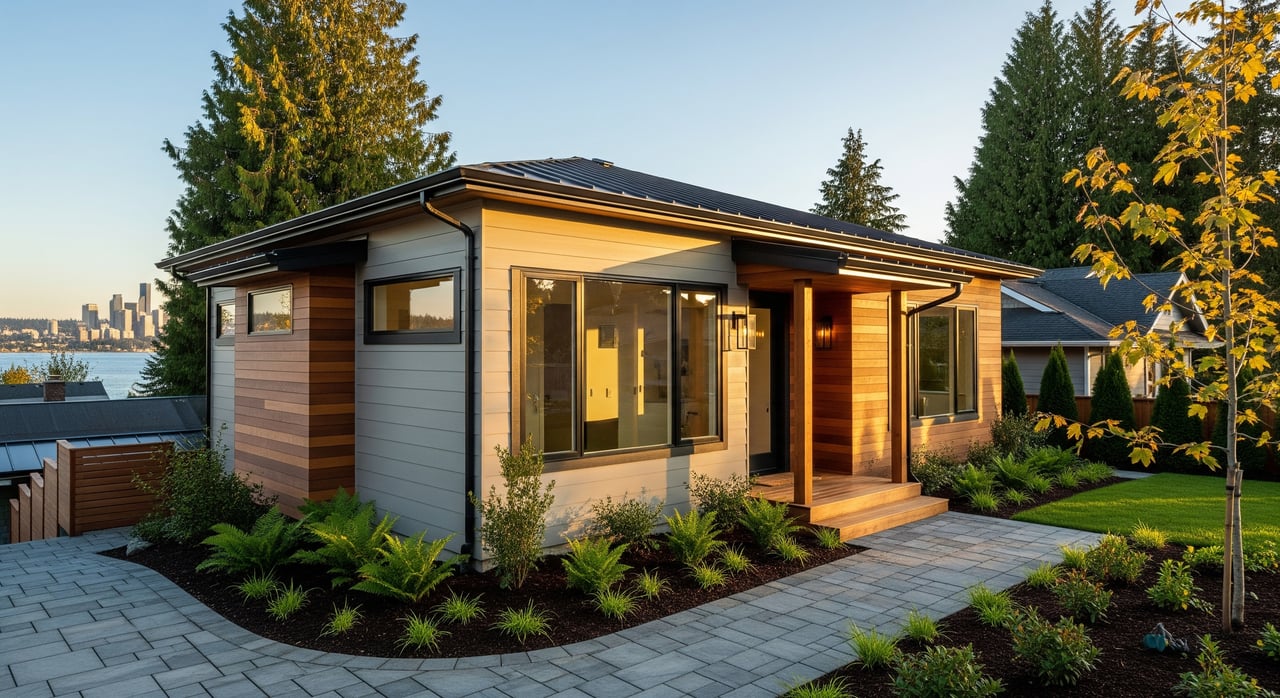
Thinking about adding an ADU to your Kirkland property to create flexibility, multigenerational space, or rental income? You are not alone. Homeowners across the Eastside are exploring ADUs to make the most of well-located lots and evolving local policy. In this guide, you will learn the core ADU types, how to evaluate feasibility on a Kirkland lot, what the permit path looks like, and how design and operating choices affect value. Let’s dive in.
ADU types: attached, detached, junior
You have several ADU formats to consider, each with different costs, timelines, and impacts on your lot.
- Attached ADU. This is an apartment created inside your home (like a basement or attic conversion) or added onto the main structure while sharing a wall and foundation. It often costs less and moves faster than a new outbuilding.
- Detached ADU. Sometimes called a backyard cottage or carriage house, this is a separate structure. It offers more privacy and can command higher rents, but it involves more site planning and typically higher build costs.
- Garage conversion or above-garage ADU. You can convert an existing garage into living space or build a unit above it. This leverages existing footprint and access but still requires full building and life-safety compliance.
- Junior ADU (JADU). A smaller unit carved from the existing home with more restrictive size and access rules. Availability and standards vary by city, so confirm whether and how JADUs apply in Kirkland.
Why this matters for you: attached or internal conversions are usually faster and less expensive to permit and build. Detached units offer privacy and potential rent upside but come with more site design, utility, and zoning considerations.
Is your Kirkland lot ADU-ready?
Before you sketch plans, confirm what your lot will allow. A quick feasibility check can save months.
Zoning and parcel basics
- Verify that your property’s zoning allows single-family use and ADUs. Some zones have special overlays or sub-area rules.
- Check minimum lot size and any neighborhood-specific standards that affect ADUs.
Setbacks, coverage, and height
- Review required rear and side setbacks for accessory structures and the maximum lot coverage.
- Confirm the height limit for a detached ADU. These controls determine whether a cottage fits behind your house.
Critical areas and environment
- Kirkland regulates steep slopes, wetlands, streams, and shorelines. If present, you may need critical area review or mitigation.
- Environmental constraints can affect placement and timeline, so identify them early.
Trees and tree protection
- Significant trees can limit where a detached ADU sits. Removal often requires a permit and mitigation.
- Plan for tree retention and protection during construction.
Utilities and sewage or septic
- Municipal sewer simplifies approvals. Septic systems can limit additional units or require engineered upgrades and permits.
- Coordinate early on water and electrical capacity. Ask whether a separate meter is allowed or required for a detached unit.
- Expect requirements for backflow prevention and wastewater capacity reviews.
Parking and access
- Parking rules vary by city and over time. Some places reduce or waive on-site parking for ADUs, while others require an additional space.
- Driveway width, slope, and sightlines can affect safe access to a backyard unit.
Historic or design review areas
- If your home is in a historic district or subject to design review, there may be additional standards and approval steps.
HOA rules and CCRs
- Private covenants can restrict ADUs even when the city allows them. Check your HOA documents and CCRs early.
Fire and life-safety
- Depending on ADU size and placement, you may need increased setbacks, hydrant proximity, or sprinklers.
- Expect fire separation and sound insulation between an attached ADU and the main dwelling.
Ownership and tenancy rules
- Some cities have had owner-occupancy requirements, short-term rental limits, or licensing for rentals. Confirm current rules for Kirkland.
Permits in Kirkland: path and timeline
A clear permit plan keeps your project moving. Here is the typical flow and timing so you can set realistic expectations.
Early steps
- Pre-application meeting. Strongly recommended. City staff can flag zoning, critical areas, tree impacts, and utility conditions before you invest in full plans.
- Site assessment. If you plan a detached ADU or addition, get a current property survey. Accurate site data reduces resubmittals.
Permit sequence
Zoning and land use review. Confirm permitted use, setbacks, lot coverage, and any critical area requirements.
Administrative reviews. Include tree clearance and any historic or design review if applicable.
Building permit application. Submit plan sets with site plan, floor plans, elevations, structural calculations for new structures, and energy code compliance documents. Mechanical, plumbing, and electrical plans are part of the package.
Utility approvals. Coordinate water, sewer, and electrical service with the appropriate providers and obtain connection permits if needed.
Fees and impact charges. Budget for system development and impact fees where applicable. Fee schedules change, so confirm current amounts.
Inspections. Expect footing, foundation, framing, rough-in inspections for mechanical, plumbing, and electrical, energy and heating checks, then a final inspection before approval for occupancy.
Timeline expectations
- Pre-design and feasibility. Plan for 2 to 6 weeks for surveys and a pre-application meeting.
- Design and permit package prep. Plan for 4 to 12 or more weeks depending on complexity and whether you are building new or converting.
- Permit review and approvals. Many projects review in 4 to 12 weeks. Environmental or design reviews can extend this.
- Construction. Smaller interior conversions can take 6 to 16 weeks. Detached new builds often run 4 to 9 months depending on site work and contractor availability.
- Overall horizon. A fast and simple conversion might finish in about 6 months from start to finish. A detached ADU with site work and full permitting often takes 12 to 18 months.
Code compliance highlights
- Washington State building and energy codes apply. Plan for insulation, ventilation, egress, and mechanical standards.
- Fire separation and sound control between units are typical for attached ADUs.
Reduce permitting friction
- Engage with permit staff and utilities early.
- Hire a licensed architect or builder with local ADU experience.
- Submit a complete application with a current survey and clear site plan to avoid multiple rounds of comments.
Confirm with the City of Kirkland
- Whether separate utility meters are required or allowed for detached ADUs.
- Maximum ADU size allowances and any JADU rules.
- Parking minimums or exemptions.
- Any current fee reductions, exemptions, or streamlined permit options for ADUs.
Design that fits your neighborhood
Thoughtful design can help your ADU blend with your property and maintain neighborly privacy.
- Massing and scale. Reduce visual impact with stepped rooflines, lower plate heights, or by placing the structure behind the main home.
- Materials and color. Use siding, roofing, and window proportions that complement your primary house.
- Privacy and sightlines. Direct windows and doors away from neighboring private spaces and manage balcony placement. Landscaping can help screen views.
- Access and service areas. Create a safe, well-lit path to the entry. Plan for discreet garbage and recycling storage and minimize driveway conflicts.
- Landscaping and permeability. Consider permeable surfaces to manage stormwater and reduce added impervious area.
Financial and operating considerations
Clarity on operating model, costs, and revenue will shape your plan and financing.
Operating models
- Long-term rental. Predictable income and tenant stability. Check local rental licensing and any occupancy limits.
- Owner-occupied with a rental ADU. Useful for offsetting mortgage costs while retaining flexibility for guests or family.
- Short-term rental. Local rules and taxes vary. Confirm whether short-term rentals are allowed and what licensing applies.
Financing and cost drivers
- Common financing. Home equity loans or HELOCs, cash-out refinance, construction loans, or private financing. Lender requirements may affect appraisal and rental income treatment.
- Major cost drivers. Foundation and structural work, utility hookups and connection fees, septic upgrades, tree mitigation, grading and drainage, and energy-code compliance.
Value and taxes
- Adding an ADU typically increases assessed value. Expect property tax changes and consult local assessment information and market comparables.
Market fit and revenue
- ADU demand on the Eastside is supported by proximity to major employment centers, transit, and amenities.
- Smaller studios or JADUs cost less to build but typically earn lower rent. Detached 1 to 2 bedroom units cost more to build and often command higher rents.
- Rents and vacancy move with market cycles. Review local rental data and comparable ADU listings when modeling revenue.
Who to hire and when
- Start with a feasibility consult. An architect or experienced builder can quickly flag site constraints and realistic options for your lot.
- If building detached or adding on, order a current survey early.
- Schedule a pre-application meeting with the City to surface zoning, tree, utility, and critical area issues.
- As your scope firms up, assemble your team. Architect, structural engineer, general contractor, and specialized trades will coordinate plan sets and costs.
Next steps for your property
- Define your goal. Clarify whether you want multigenerational space, long-term rental income, or a future-flex option that adds resale value.
- Do a site check. Review zoning, setbacks, trees, and utilities, and gather existing drawings and records.
- Meet the City. Book a pre-application meeting to confirm your path and identify red flags.
- Choose a format. Attach, convert, or build new based on budget, timeline, and privacy needs.
- Build your team. Engage local pros who have delivered ADUs on the Eastside.
- Plan, submit, and iterate. Prepare a complete permit package and respond promptly to review comments.
When you want a strategic partner to connect feasibility, value, and long-term management, reach out to the local team that supports both premium sales and high-quality rentals. The advisors at Sound Real Estate Services can help you evaluate ADU options, model rental income, and manage leasing and operations once your unit is ready.
FAQs
What is the difference between attached, detached, and junior ADUs in Kirkland?
- An attached ADU is inside or added onto your main home, a detached ADU is a separate backyard structure, and a junior ADU is a smaller unit within the existing footprint with more restrictive size and access rules that vary by city.
How do I know if my Kirkland lot can fit a detached ADU?
- Check setbacks, maximum lot coverage, and height limits, then account for trees, critical areas, and utilities; a current survey and pre-application meeting will clarify realistic placement.
Does Kirkland require owner-occupancy for ADUs?
- Owner-occupancy rules vary by jurisdiction and change over time, so confirm the current policy with the City of Kirkland before finalizing your plan.
Will I need septic upgrades or a sewer hookup for an ADU?
- Properties on municipal sewer typically have a simpler path, while septic systems may limit added units or require engineered upgrades and permits.
How long does ADU permitting and construction usually take in Kirkland?
- A simple interior conversion can complete in about 6 months from start to finish, while a detached ADU with site work often takes 12 to 18 months.
What inspections should I expect during ADU construction?
- Expect footing, foundation, framing, rough-in mechanical, plumbing and electrical inspections, energy and heating checks, then a final inspection before occupancy approval.
What local constraints should I review before designing an ADU in Kirkland?
- Confirm zoning allowances, setbacks, lot coverage, tree protection, critical areas, parking and access, utility capacity, and any historic or design review triggers.
How might an ADU affect my property taxes and value?
- Adding an ADU typically increases assessed value and property taxes; review local assessments and market comparables when planning.
Can I use an ADU as a short-term rental in Kirkland?
- Short-term rental rules and licensing vary and can change, so verify current requirements with the City of Kirkland before listing.
Who should I hire first for an ADU project?
- Start with an architect or builder experienced with local ADUs to test feasibility and scope, then schedule a City pre-application meeting and order a survey if you are building a detached unit.